
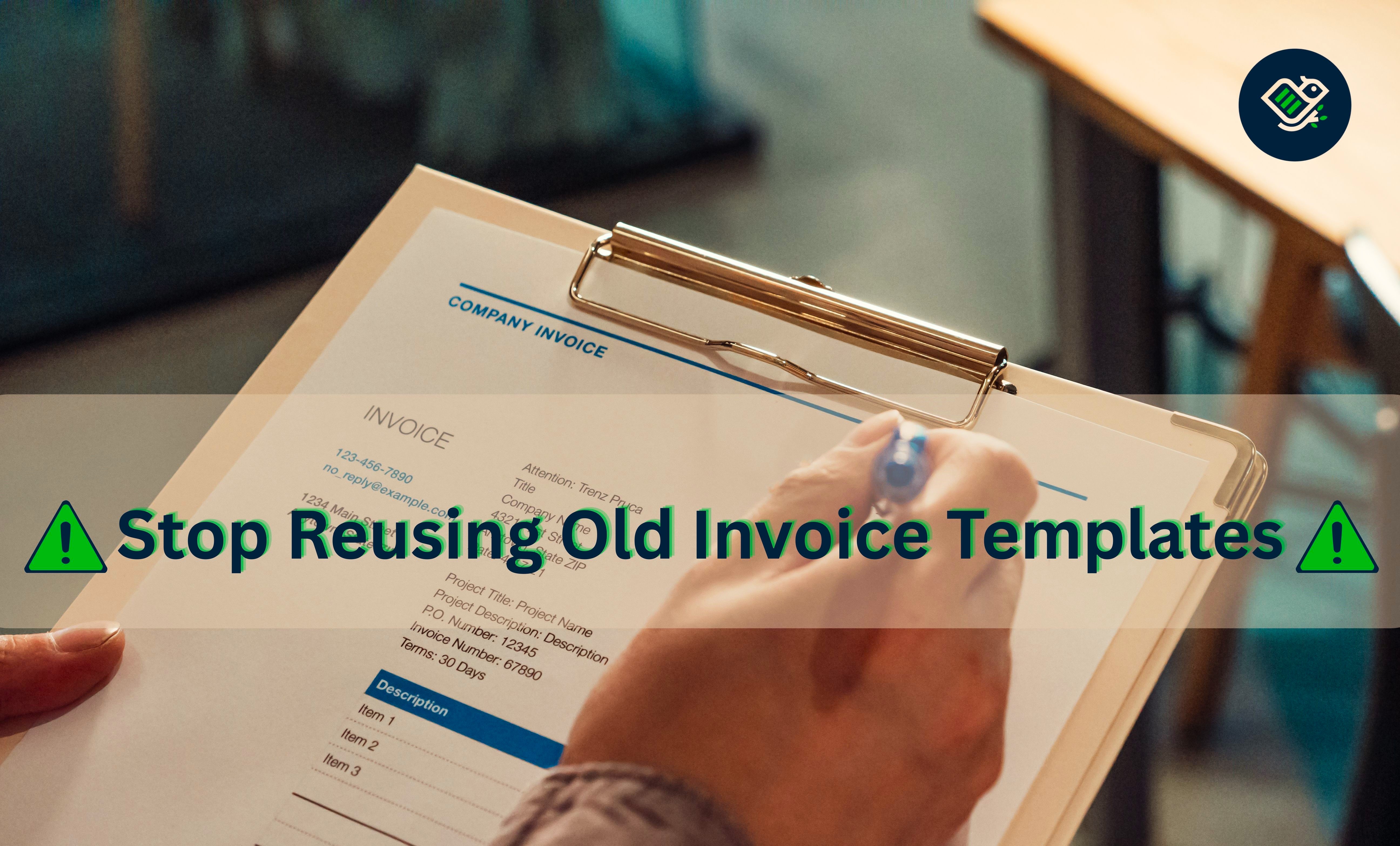
The Hidden Cost of "Good Enough"
Many small businesses begin with a simple invoice template downloaded from the internet or created in a spreadsheet. It works for the first few clients, so there seems to be no reason to change it.
Months later, that same template is still being reused.
Customer names are overwritten manually. Invoice numbers are updated by hand. Payment details are copied and pasted. Tax information is adjusted for every new client.
It feels familiar, but familiarity is not always efficiency.
The longer a business relies on static invoice templates, the greater the chance of mistakes, inconsistent branding, and slower payments. What once saved time gradually becomes another repetitive administrative task.
Professional invoicing should support business growth. Not slow it down.
Manual Editing Creates Unnecessary Errors
Every invoice should be accurate.
Unfortunately, manually editing the same template repeatedly increases the likelihood of simple but costly mistakes.
Common examples include:
Incorrect client names
Duplicate invoice numbers
Wrong invoice dates
Old payment information
Missing tax details
Incorrect totals
Outdated business addresses
Even a small error can delay payment if the client has to request a corrected invoice.
Accounting departments often reject invoices that contain inaccurate or incomplete information, meaning another review cycle before payment can even begin.
Every Client Deserves a Professional Experience
Invoices are part of your customer experience.
After completing a project successfully, the invoice becomes one of the final interactions your client has with your business.
A clean, consistent invoice reinforces professionalism.
An outdated template with inconsistent formatting or missing branding sends the opposite message.
Professional invoices build confidence by showing that your business has organized processes and pays attention to detail.
That confidence often extends beyond a single project and contributes to long-term client relationships.
Consistency Matters as Your Business Grows
Managing five invoices each month is very different from managing fifty.
As businesses grow, manual templates become increasingly difficult to maintain.
Different team members may edit templates differently.
Different versions begin circulating.
Formatting changes unexpectedly.
Some invoices include updated payment terms while others do not.
Without a standardized system, consistency quickly disappears.
Using one centralized invoicing workflow ensures every invoice follows the same professional format regardless of who creates it.
Your Branding Should Stay Consistent
Brand consistency is often associated with websites and social media.
Invoices deserve the same attention.
Every invoice represents your business.
Using consistent logos, colors, fonts, and contact information creates a recognizable brand identity that clients remember.
Professional branding also helps invoices stand out in crowded inboxes, making them easier for clients to recognize and process.
Save Time on Every Invoice
The time required to manually edit templates may seem insignificant.
Five minutes here.
Ten minutes there.
Over an entire year, those minutes become dozens of hours spent performing repetitive work.
Automation eliminates much of this effort by storing customer information, payment terms, tax settings, and business details.
Instead of rebuilding every invoice from the previous one, you simply select the client, review the information, and send.
The less time spent creating invoices, the more time remains for serving customers and growing the business.
Keep Records Organized
Businesses eventually need to answer questions like:
Which invoices were sent last month?
Which customers still owe payment?
What was billed to a specific client six months ago?
Searching through folders filled with copied invoice templates can quickly become frustrating.
An organized invoicing system keeps every invoice searchable by customer, invoice number, status, or date.
When information is easy to find, administrative work becomes much simpler.
Prepare for Tax Season More Easily
Tax preparation often becomes stressful when financial records are scattered across multiple folders and spreadsheets.
Consistent invoice management makes year-end reporting significantly easier.
Because invoices are stored in one location with standardized information, businesses can quickly review income, verify invoice history, and provide accurate documentation to accountants when needed.
Good organization throughout the year reduces pressure when tax deadlines arrive.
Support Faster Payments
Well-structured invoices reduce delays.
Clients receive complete information immediately.
Payment terms are clearly displayed.
Invoice numbers remain unique.
Payment instructions stay consistent.
Nothing needs clarification before payment can be processed.
The fewer questions clients have, the faster they can approve and pay the invoice.
Removing administrative friction benefits both businesses and their customers.
Build Processes That Scale
Every growing business eventually reaches a point where manual processes stop working.
Replacing old invoice templates is not simply about improving document design.
It is about building systems that continue working as your customer base grows.
Scalable invoicing allows businesses to focus less on repetitive administration and more on delivering value, improving customer relationships, and expanding operations.
Modern invoicing is not just about creating documents.
It is about creating efficient business processes.
Frequently Asked Questions
Is it okay to use the same invoice template for every client?
Yes, provided the template is updated accurately each time. However, using an invoicing system reduces manual editing and minimizes errors.
Why are duplicate invoice numbers a problem?
Unique invoice numbers help businesses maintain accurate financial records and make invoices easier to track during accounting or tax reporting.
Can invoice templates affect payment speed?
Yes. Missing information, formatting issues, or incorrect payment details can delay approval and payment.
When should a business move beyond spreadsheet templates?
Once invoicing becomes repetitive, time-consuming, or prone to mistakes, switching to a dedicated invoicing solution can improve efficiency and organization.
Put this into practice
Create your next invoice with the free InvoiceBirds generator, professional templates, automatic totals, instant PDF. No account needed.
Try the free invoice generator