
For decades, businesses have exchanged invoices using paper documents, email attachments, and PDF files. While these methods are familiar, they often require manual processing, increase the risk of errors, and slow down payments.
As governments and businesses continue their digital transformation, electronic invoicing has become more than just a convenience. In many countries, it's becoming a requirement.
One name that appears frequently in conversations about e-invoicing is Peppol.
If you've researched electronic invoicing recently, you've probably seen the term mentioned alongside digital tax reporting, government procurement, or international business. But what exactly is Peppol, and why are more organizations choosing to use it?
Let's break it down in simple terms.
What Is Peppol?
Peppol stands for Pan-European Public Procurement OnLine.
Originally developed to simplify electronic procurement across European countries, Peppol has evolved into an international network that allows businesses and public organizations to exchange electronic business documents securely and in a standardized format.
Although many people associate Peppol with invoices, the network can also be used to exchange documents such as purchase orders, credit notes, shipping notices, and other business records.
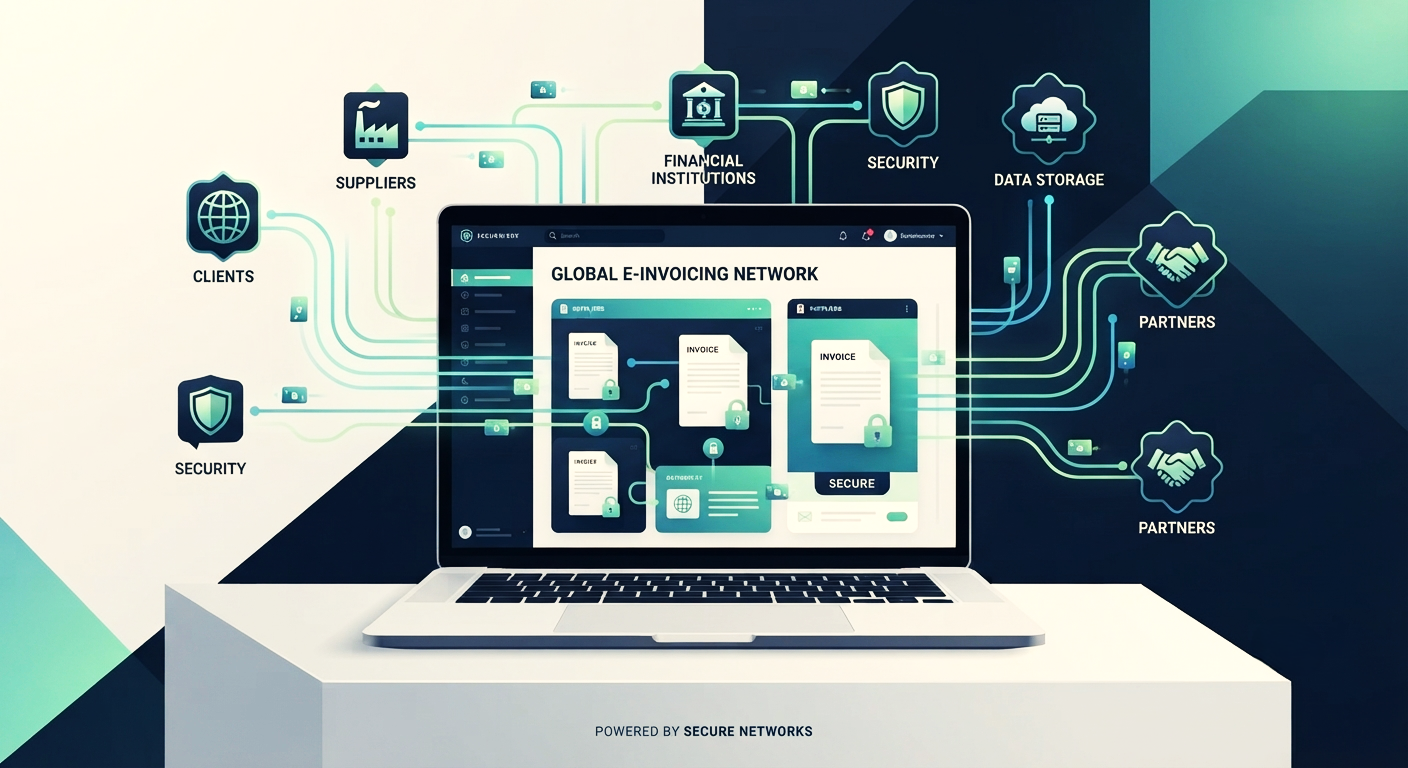
Think of Peppol as a secure digital highway that allows accounting systems to communicate directly with one another.
Instead of emailing invoices as PDF attachments, businesses can send structured electronic invoices directly from one accounting or invoicing system to another.
How Does Peppol Work?
Unlike email, where documents are attached and manually processed, Peppol follows a standardized communication model.
When a business sends an invoice through the Peppol network, the invoice is converted into a structured electronic format that computers can read automatically.
The invoice travels through certified Peppol Access Points before reaching the recipient's accounting software.
Because both systems understand the same standardized format, the invoice can often be processed without manual data entry.
This reduces errors, saves time, and speeds up invoice processing.
Why Isn't a PDF Enough?
Many businesses believe that sending a PDF invoice electronically means they're already using e-invoicing.
In reality, a PDF is simply a digital document designed for people to read.
Someone still needs to open the file, review the information, and often type the invoice details into another accounting system.
Peppol works differently.
Instead of sending an image of an invoice, it sends structured data.
The recipient's software can automatically recognize details such as:
Invoice number.
Supplier information.
Customer information.
Invoice date.
Due date.
Tax information.
Invoice lines.
Amounts due.
Because the information is already structured, manual entry becomes unnecessary in many cases.
Why Are More Businesses Using Peppol?
Several factors are driving the rapid adoption of Peppol around the world.
Governments Are Introducing E-Invoicing Requirements
Many governments now require suppliers to submit electronic invoices when working with public sector organizations.
Rather than accepting paper invoices or email attachments, government agencies increasingly expect invoices to be delivered through approved electronic networks such as Peppol.
Businesses that regularly work with public institutions often adopt Peppol to meet these requirements.
Faster Invoice Processing
Traditional invoices may spend days moving between departments before someone manually enters the information into an accounting system.
Structured electronic invoices significantly reduce this work.
Less manual processing often means faster approvals and quicker payments.
Fewer Errors
Manual data entry creates opportunities for mistakes.
Typing errors, missing information, duplicate invoices, and incorrect tax values can all delay payment.
Because Peppol transfers structured information directly between systems, many of these errors are eliminated.
Improved Security
Email inboxes remain a common target for phishing attacks and invoice fraud.
Since Peppol uses certified Access Points and standardized communication, businesses benefit from a more secure method of exchanging financial documents.
While no system is completely immune to fraud, secure electronic document exchange reduces several common risks associated with traditional email invoices.
Better Automation
Many businesses are looking for ways to automate repetitive administrative tasks.
Peppol supports that goal.
Invoices can move automatically between systems, reducing administrative work and allowing accounting teams to focus on higher-value activities.
Who Uses Peppol?
Although Peppol was originally designed for public procurement in Europe, its use has expanded considerably.
Today, businesses of all sizes use Peppol.
Government agencies.
Large enterprises.
Small businesses.
Freelancers working with public sector clients.
Accounting firms.
Software providers.
Healthcare organizations.
Educational institutions.
Several countries have adopted Peppol as part of their national digital invoicing strategies, while others continue expanding its use across both public and private sectors.
Is Peppol Only for Europe?
Despite its European origins, Peppol is no longer limited to Europe.
Countries in Asia-Pacific and other regions have also adopted the framework for electronic document exchange.
As international trade continues to grow, businesses increasingly benefit from using common standards that simplify cross-border transactions.
This growing international adoption is one reason many invoicing software providers now support Peppol integration.
Does Every Business Need Peppol?
Not necessarily.
If your business only sends occasional invoices to local customers who prefer PDF invoices, switching immediately may not be essential.
However, businesses should pay attention to changing regulations.
If you supply government organizations, work with larger enterprises, or operate in countries introducing mandatory e-invoicing requirements, adopting Peppol may soon become an important part of your invoicing process.
Even businesses that aren't currently required to use Peppol may benefit from understanding how it works as digital invoicing continues to expand worldwide.
How Can Businesses Prepare?
The transition doesn't have to happen overnight.
Businesses can begin preparing by reviewing their current invoicing process.
Ask questions such as:
Do we still rely entirely on PDF invoices?
Are our customers requesting structured electronic invoices?
Do we work with government agencies?
Will upcoming regulations affect our business?
Does our invoicing software support modern e-invoicing standards?
Answering these questions helps businesses plan future improvements rather than reacting to regulatory deadlines.
The Future of Business Invoicing
Paper invoices are becoming less common.
PDF invoices remain widely used, but many organizations are moving toward structured electronic invoicing because it improves efficiency, reduces errors, and supports automation.
Peppol is one of the standards helping make that transition possible.
As more governments introduce digital reporting requirements and more businesses automate their financial processes, understanding Peppol will become increasingly valuable.
Businesses that prepare early are often better positioned to adapt when new requirements arrive.
Frequently Asked Questions
Does InvoiceBirds support the Peppol network?
Yes, InvoiceBirds is fully equipped to generate government-compliant e-invoices using the Peppol, Factur-X, and XRechnung standards.
When should I start using these e-invoicing features?
You should start now to gain a competitive advantage, as the system is specifically built to align with the upcoming 2026 to 2027 mandatory e-invoicing mandate timelines.
Can I manage more than just my outgoing invoices with this system?
Yes, the platform allows you to both generate compliant invoices and receive or read your suppliers' e-invoices directly within a single integrated inbox.
Put this into practice
Create your next invoice with the free InvoiceBirds generator, professional templates, automatic totals, instant PDF. No account needed.
Try the free invoice generator